PACEFOLDDaily Trainer Notes
Sponsored content from Pacefold

Reader question

7 signs your running shoes are worn out

It is a fair question, and it usually has a simple answer: the shoe tells you, if you know where to look. Here are the seven checks a running-club coach would run through, in the order they come up. You can do all of them on your own shoes with your hands and your eyes.

This is an advertorial written by Pacefold. It is a checklist, not medical or injury advice — if something hurts, talk to a physio or a doctor rather than a shoe page.
Seven signs, in orderNo tools needed
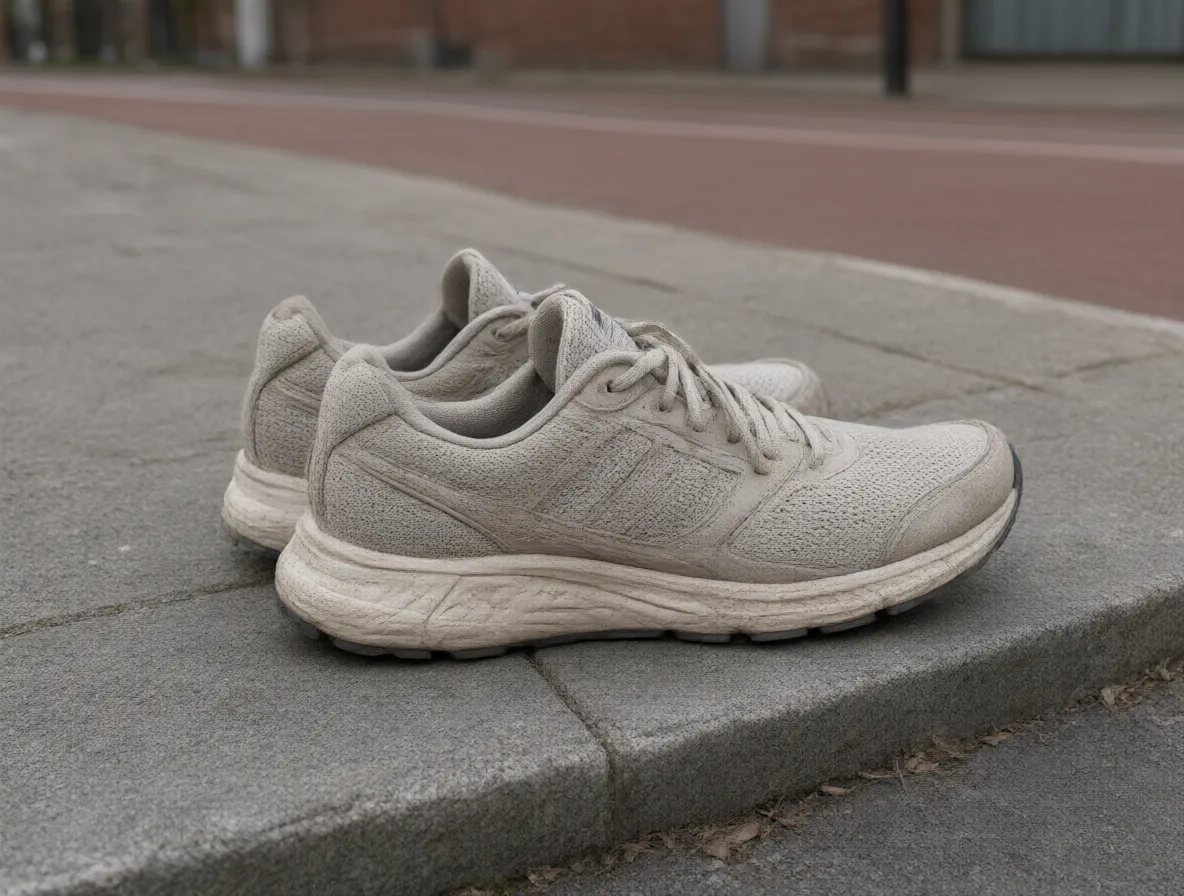
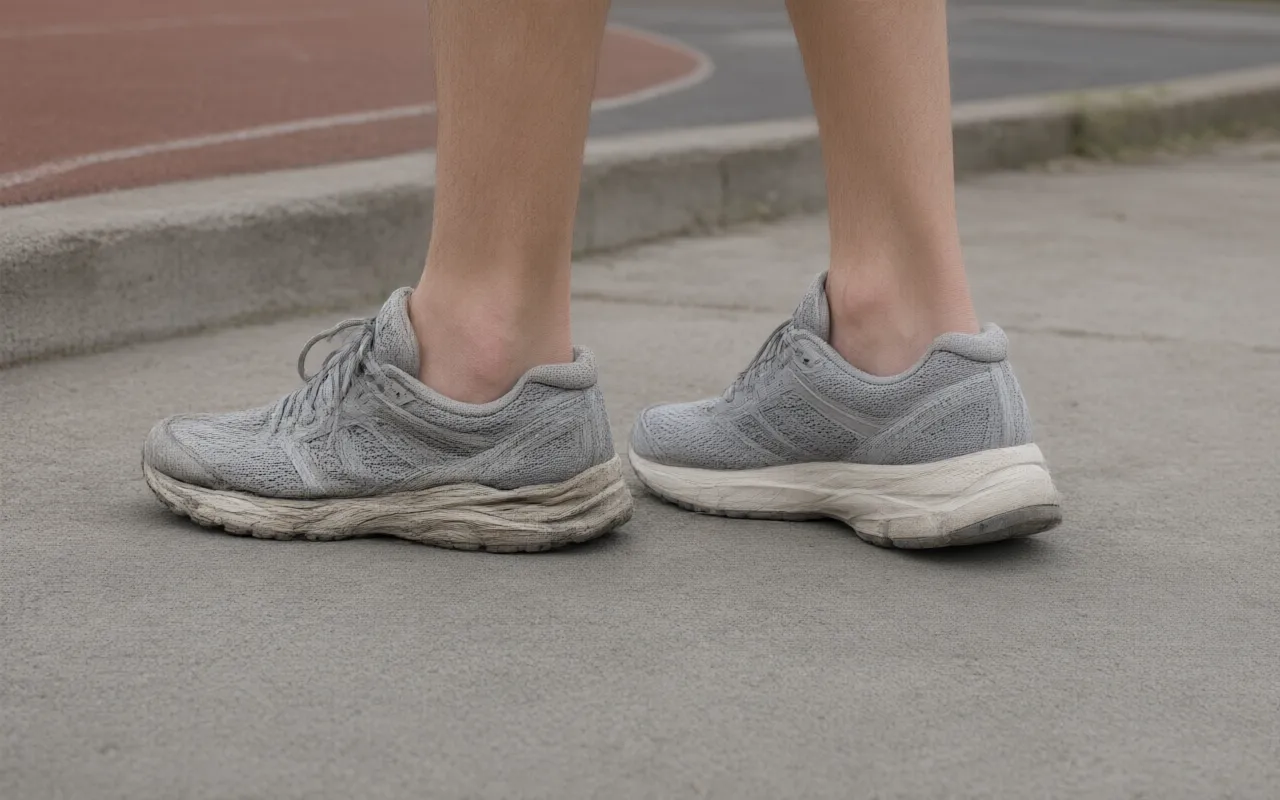
A pair of well-used running shoes on a concrete pavement
The check starts with the shoes by the door — the ones you actually run in, not the ones you keep for the shop.

The checklist

Check these seven things on your own shoes today

Work down the list in order. Nothing here needs tools — just your hands, your eyes and one honest question about when you last replaced them.

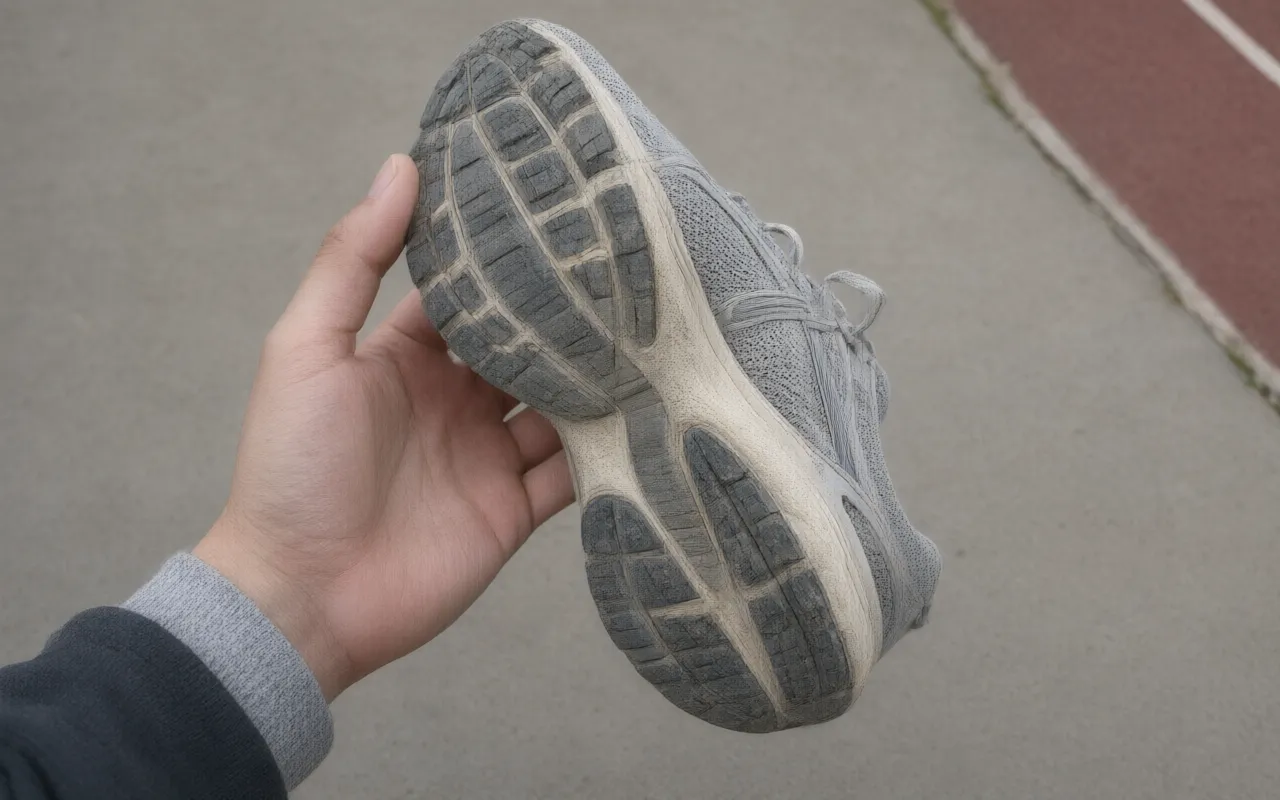
  1. The outsole of a worn running shoe held up to the light
    01

    The tread has gone smooth, or worn unevenly

    Rubber wears where you land, so some scuffing on the outsole is normal. Smooth patches under the forefoot visible enough to make the pattern hard to read mean less grip on wet pavement.

    How to checkCompare the pattern with a new pair

    Turn the shoe over and look at the tread the way it looked when the shoe was new — the raised pattern should still stand up out of the sole. Where it has worn flat, the grooves have filled in and the surface is smooth to the touch. Compare the left shoe against the right, too: an even pair of soles is easier to read than one on its own, and any patch that has gone smooth will show up against the other shoe.

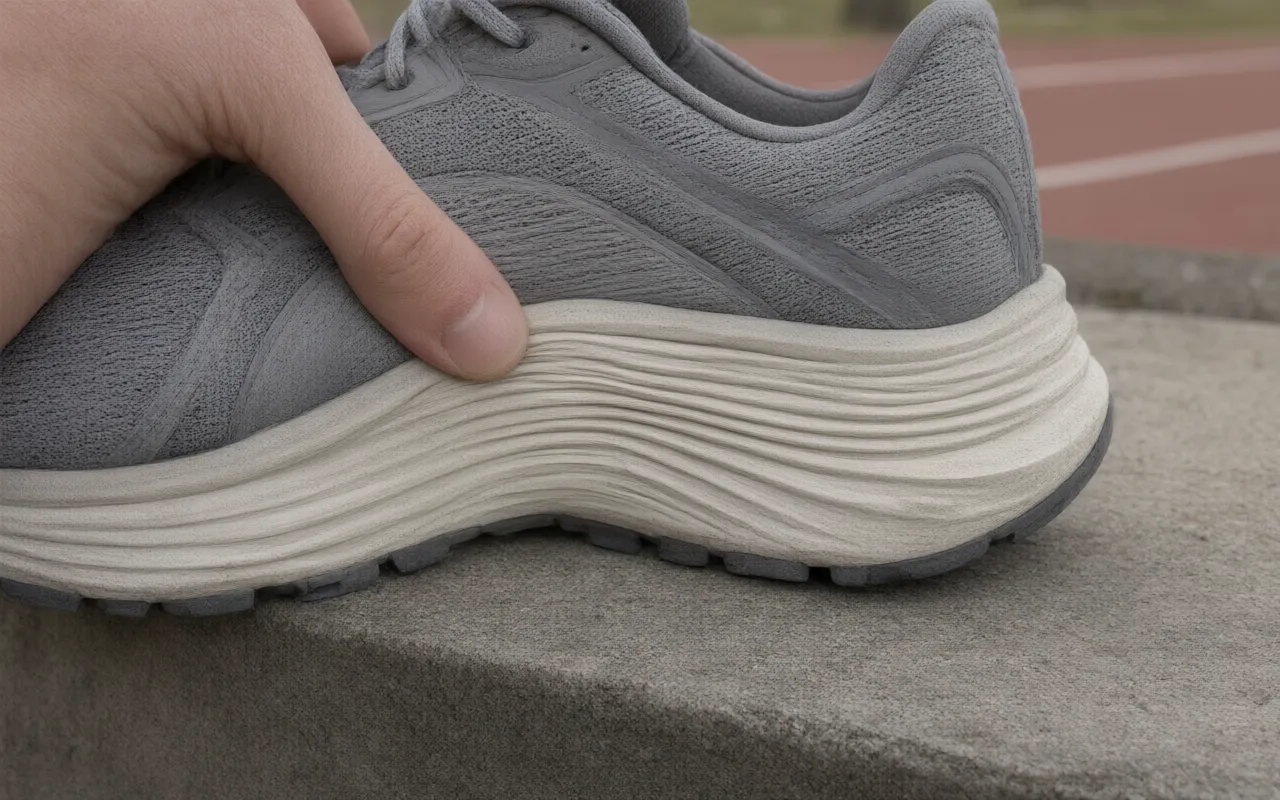
  2. Deep creases in the foam side wall of a running shoe
    02

    Deep creases in the midsole foam

    Foam compresses where your foot bends and where you land. Fine lines are normal. Folds you can press your fingernail into are the foam giving up its shape.

    How to checkPress the side wall with a thumb

    Push into the midsole just behind the forefoot crease. Your thumb should meet firm resistance and the foam should spring back. A crease that stays folded after you press it is a shoe that has done its miles.

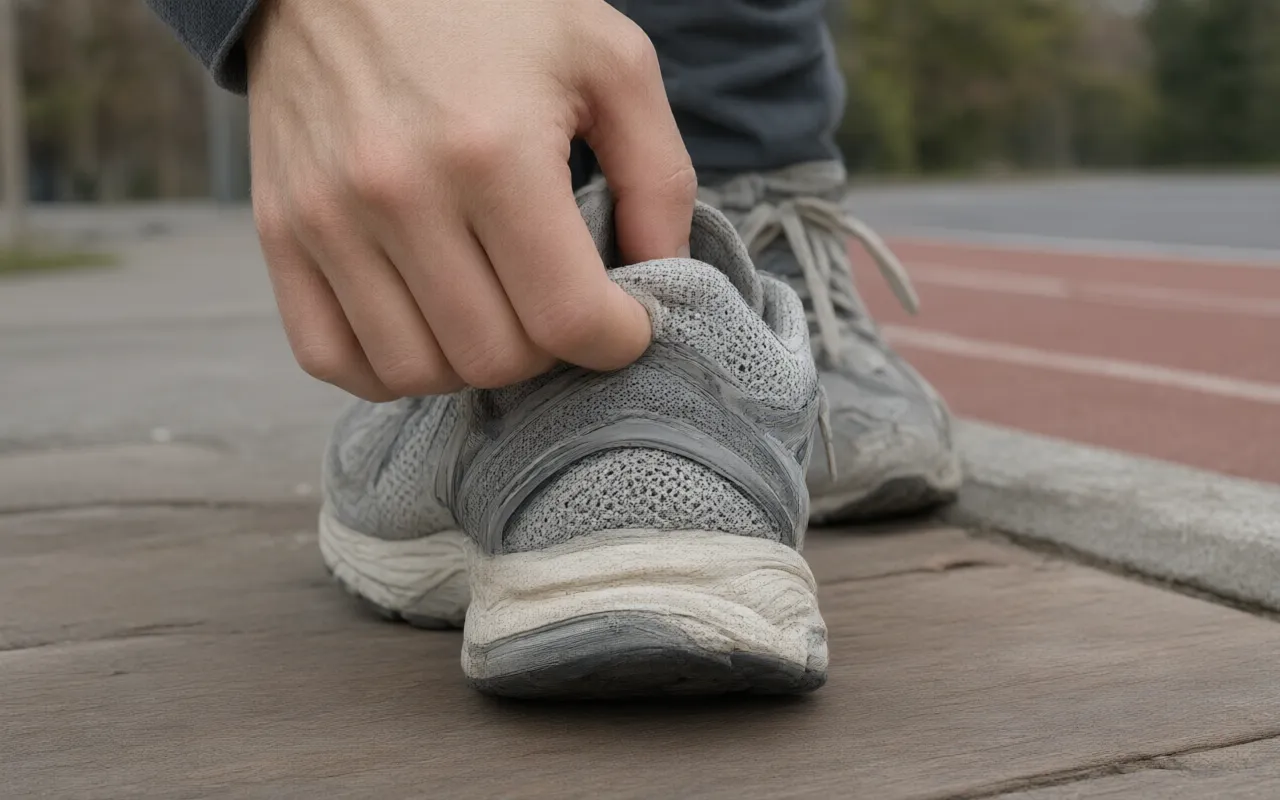
  3. A hand pinching the heel counter of a running shoe
    03

    The heel counter has gone soft

    The plastic cup around the heel is what keeps your ankle sitting where the shoe was built for it to sit. Once it softens, the back of the shoe starts to fold in your hand.

    How to checkPinch the heel between thumb and fingers

    A healthy heel counter feels stiff and holds its curve — squeeze it and you should feel plastic, not padding. You can also look inside the collar: if the lining is worn through and the shape has collapsed, there is nothing left to hold the heel.

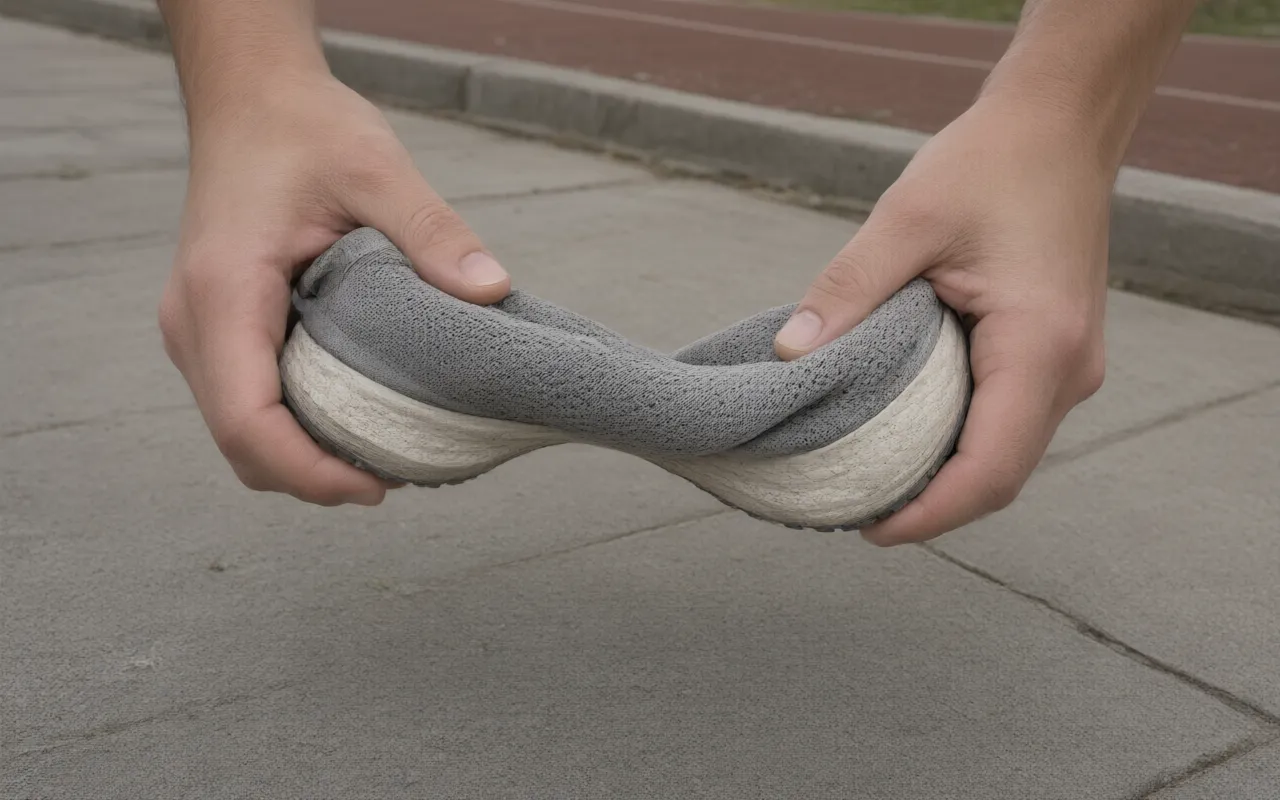
  4. Two hands twisting a running shoe end to end
    04

    The shoe twists too easily

    A daily trainer should bend where your foot bends and stay reasonably straight everywhere else. A shoe that wrings out like a towel has lost the structure that made it feel planted.

    How to checkTwist it end to end, then bend at the toes

    Hold the heel in one hand and the toe in the other and twist gently; then fold the shoe where your toes would bend. The fold should happen at the ball of the foot, not in the middle of the arch. If the middle folds too, the shoe has gone soft where it should be firm.

  1. A worn mesh upper on a running shoe held against a window
    05

    The upper is wearing through near the toes

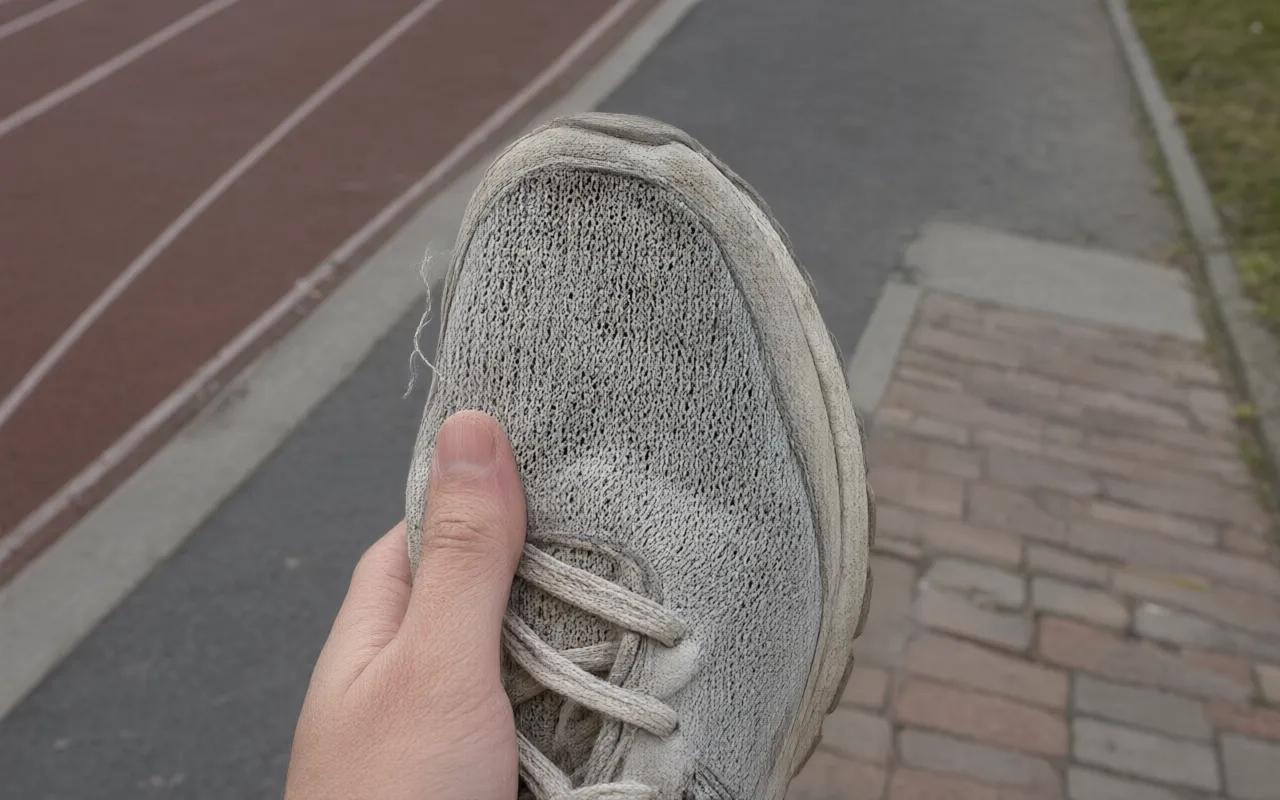
    Mesh rubs against the inside of itself and against your toes. The first places to go are the crease across the top of the toes and the inside edge where your big toe pushes.

    How to checkLook inside with a light

    Hold the shoe up to a window and look through the mesh from the inside. Thin, see-through patches, a loose thread you can pull, or lining rubbed down to a hole all mean the upper is on its way out — usually before the sole is.

  2. A worn shoe and a newer shoe on two feet
    06

    The cushioning feels flatter than it used to

    This one is about feel rather than looks. Foam loses its bounce gradually, so you adjust your stride without noticing — and the shoe slowly stops doing the job you bought it for.

    How to checkCompare against a newer pair

    If you have an older or newer pair in the house, put one on each foot and take twenty steps — the difference between them is often easiest to feel that way. No second pair? Go by what you remember: think back to the last easy run where the shoe felt like it had a lift to it, and how long ago that was.

  3. Reading the size label inside the heel of an old running shoe
    07

    You have lost track of how long you have run in them

    This is the honest one. If you cannot remember buying them, that is worth taking as a yes — foam only holds its shape for so long, and a shoe is at its freshest in the early part of its life.

    How to checkCheck the label or your order history

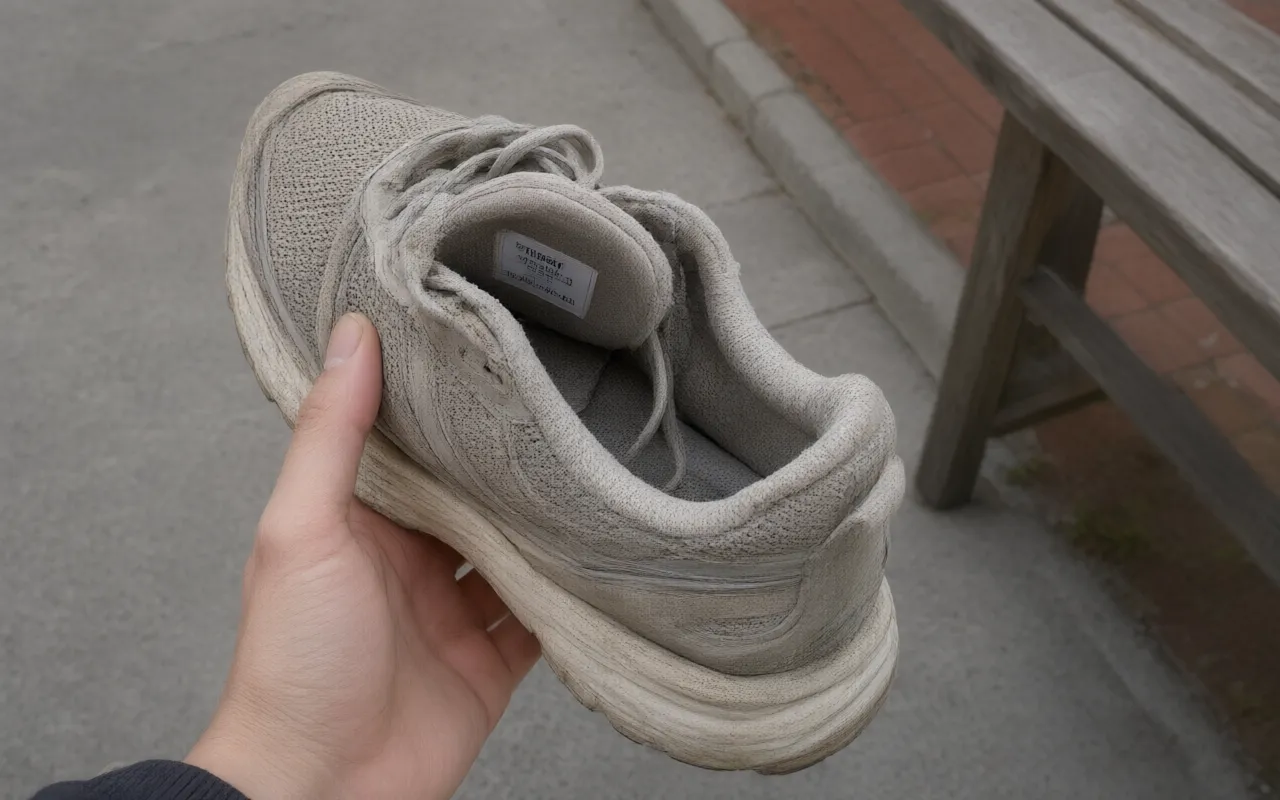
    Look at the size label inside the heel, or search your email for the receipt and the order date. Then think about the last few weeks: if running in them has become something you tolerate rather than something you look forward to, that is your answer, whatever the number says.

None of these checks are a diagnosis of anything. They are just the plain signs that a neutral daily trainer has stopped doing what it was built to do.

If it is time for a new pair

One option for the next pair: the Pacefold Daily

Once you have counted two or three of the signs above, the useful question changes from “are these done?” to “what do I replace them with?” We make one shoe, and this is it — a neutral, cushioned trainer for everyday road runs. It is not a race shoe and it is not a magic fix. It is the pair you put on three or four mornings a week.

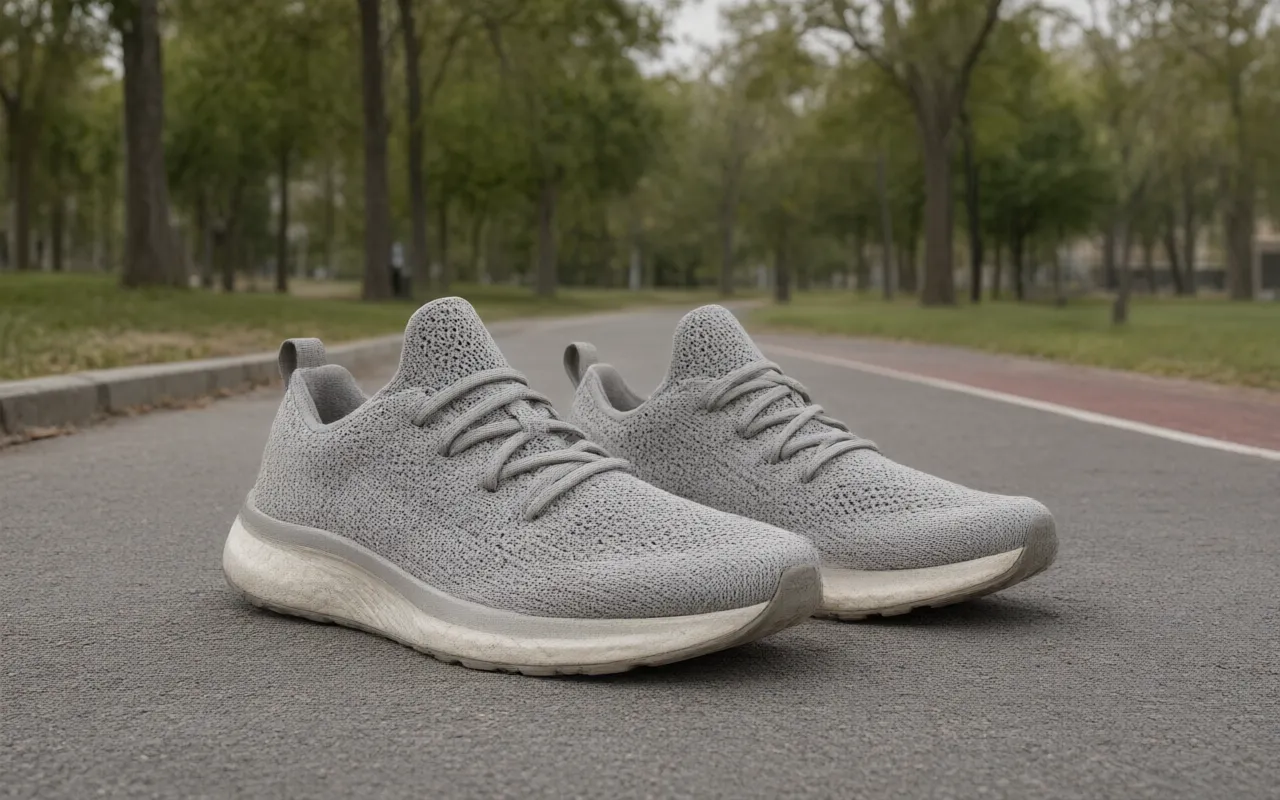
The Pacefold Daily on a park path

The Pacefold Daily in its standard neutral colourway.

Pacefold Daily

A cushioned daily trainer with a breathable knit upper, built for regular road miles at an easy effort.

Price$120
TypeNeutral daily trainer
UpperBreathable knit
Where it fitsEveryday road runs

Free returns within 30 days, even if you have worn them on a run. Buy them, run in them, and send them back if they are not right.